Clean Water
Begins at the
Source.
The Owassa Headwaters Foundation protects Lake Owassa, Culver Lake, and the Paulinskill River — the glacial headwaters feeding the Delaware River — for the communities and ecosystems that depend on them.

Protecting the Headwaters of the Delaware
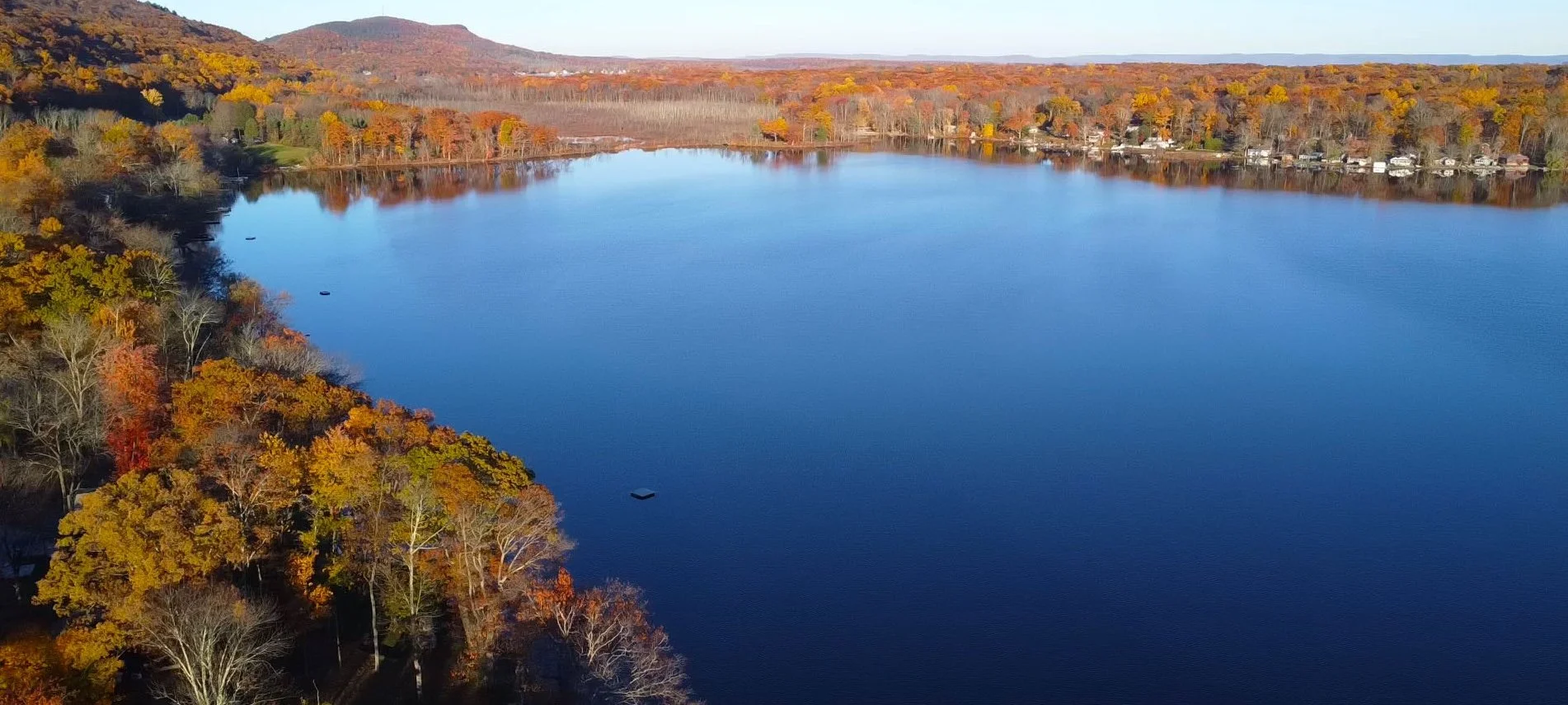
The Owassa Headwaters Foundation was formed in 2022 with a clear vision: abundant, clean water flowing through Sussex County, New Jersey to the Delaware River. Sheltered in the rural northwest corner of the state, Lake Owassa and Culver Lake are glacial jewels bounded by thousands of acres of Kittatinny Ridge and Bear Swamp Wildlife Refuge.
As the area transitioned from forest to farmland to residential housing, years of sediment and nutrient loading gradually degraded water quality in these two irreplaceable lakes. Today, we work to reverse that trend — through long-term planning, science-based management, and community partnerships.
Our geographic focus covers Lake Owassa, Culver Lake, Dry Brook, and the Upper Paulinskill River — the critical headwaters that shape water quality for the entire region downstream.
These Delaware Watershed headwaters are two jewels of nature — supporting a flourishing ecosystem filled with fish and wildlife. Our challenge, and our commitment, is to preserve and restore as much as possible for the future.
— Owassa Headwaters Foundation, Sussex County, NJ
How We Protect the Watershed
From reducing nutrient runoff to educating homeowners and building community partnerships, we tackle water quality from every angle.
Stormwater Management
We identify priority areas where stormwater carries phosphorus and sediment into Lake Owassa and Culver Lake, then work with homeowners and municipalities to implement rain gardens, riparian buffers, and rock-channel runoff controls that intercept contaminants before they reach the water.
Our approachWater Quality Monitoring
Science-based monitoring of phosphorus, cyanobacteria, sediment loads, and biological indicators across Lake Owassa, Culver Lake, Dry Brook, and the Upper Paulinskill River — supporting Watershed Based Planning in partnership with Clean Waters Consulting LLC and the NJDEP.
Our scienceCommunity Education & Outreach
Seminars, workshops, and hands-on programs empower lakefront property owners to become stewards of the watershed — from planting native vegetation to redirecting downspouts and managing lawn fertilizers that fuel harmful algal blooms in Lake Owassa and Culver Lake.
Get educatedWhy Our Headwaters Need Protection Now
Harmful Algal Blooms (HABs)
When excess phosphorus enters Lake Owassa or Culver Lake — carried by stormwater from lawns, roads, and developed shorelines — it creates conditions for Harmful Algal Blooms. These blooms of cyanobacteria can restrict lake use for the entire season, harm wildlife, and produce toxins dangerous to humans and pets.
Heavy rain events mobilize nutrients from fertilizers and impervious surfaces, delivering a sudden nutrient spike that triggers explosive algae growth. The best treatment is prevention at the source — before runoff ever reaches the lake.
What You Can Do at Home
Every lakefront property owner plays a role. Planting native trees and shrubs along your shoreline, installing a rain garden, redirecting downspouts away from impervious surfaces, and maintaining your septic system all reduce the nutrient load entering our shared lakes.
Get InvolvedKittatinny Ridge
Lake Owassa + Culver Lake
Paulinskill River
Delaware River
Showing stormwater flow paths & nutrient sources
From Data to Action
We follow a science-driven cycle to identify, plan, implement, and sustain solutions that restore our headwaters.
Monitor & Assess
Continuous water quality monitoring measures phosphorus, cyanobacteria, and sediment loads across the watershed to identify problem areas and track long-term trends.
Plan & Prioritize
Data-driven Watershed Based Planning calculates pollutant loads and identifies priority intervention areas where conservation investments will have the greatest impact per dollar.
Partner & Implement
We work with lake associations, property owners, municipalities, and state agencies to design and install rain gardens, riparian buffers, and stormwater management systems.
Educate & Sustain
Long-term success requires community stewardship. We provide education programs, grant guidance, and workshops that equip residents to maintain conservation practices independently.
Be a Headwaters Steward
Whether you live on the lake, care about New Jersey's natural resources, or want to make a measurable difference in your community — there's a role for you.
Donate
Your tax-deductible gift funds water quality monitoring, community outreach, and conservation projects that protect Lake Owassa and Culver Lake for future generations.
How to GiveVolunteer
Join our monitoring team, help at community planting events, assist with homeowner education workshops, or lend your professional expertise to our conservation mission.
Get in TouchTake Action at Home
Plant native trees and shrubs along your shoreline, install a rain garden, minimize fertilizer use, redirect downspouts, and maintain your septic system. Every property makes a difference.
Learn HowMake a Donation
Your tax-deductible gift protects Lake Owassa, Culver Lake, and the Paulinskill River headwaters — funding water quality monitoring, restoration, and community education for future generations.
Donate by Check
Donation checks may be mailed to:
Owassa Headwaters FoundationP.O. Box 215
Branchville, NJ 07826
Stocks, Wire & More
Other forms of donation (e.g. stocks, wire transfer) can be easily arranged. Just contact us through our email at:
owassafoundation@gmail.comThe Owassa Headwaters Foundation is a registered 501(c)(3) nonprofit organization (EIN 87-4238934). Donations are tax-deductible to the extent permitted by law.
Frequently Asked Questions
Community AssociationLOCA
Watershed FoundationGCLWCF
Environmental ProtectionNJDEP
Watershed GroupSussex County MUA
Consulting LLCTechnical Partner
Get in Touch
Questions about our work, volunteer opportunities, grants, or partnerships — we'd love to hear from you.
Newton & Branchville, NJ
Sussex County, New Jersey
87-4238934
Thank You!
Your message has been sent to the Owassa Headwaters Foundation. We'll be in touch soon.